Shh, She Won: The Unspoken Rule Telling Australian Women to Keep Their Jackpots Quiet — And the Women Refusing to Stay Silent
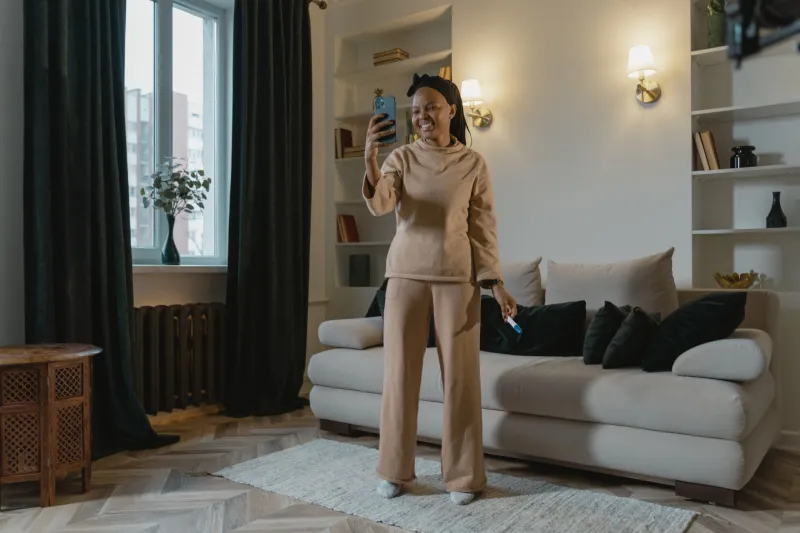
Imagine this: you've just hit a jackpot. Your screen is flashing, your heart is hammering, and for one brilliant moment, everything feels electric. Now imagine immediately thinking, Who can I actually tell about this?
For a lot of Australian women, that second thought arrives almost before the first one fades. Not excitement about what to do with the money. Not pride in the win. Just a quiet, almost reflexive calculation about who's safe to share it with — and whether sharing it at all is worth the hassle.
This is the visibility trap. And it's more common than most people realise.
The Double Standard Nobody's Talking About
Australia has a deeply embedded gambling culture. We're one of the highest per-capita gambling nations in the world, and the social rituals around it — the footy tipping, the Melbourne Cup sweepstakes, the Sunday arvo at the local — are woven into everyday life. But there's a gendered undercurrent to all of it that rarely gets examined.
When men win, it tends to be a social event. A story worth telling. When women win, the reaction they anticipate — and often receive — is far more complicated.
Dr. Priya Nair, a Melbourne-based psychologist who specialises in gender and behavioural patterns, puts it plainly: "Women are socialised from a very young age to minimise their own success in contexts that are seen as competitive or financially aggressive. Gambling sits at that intersection of money, risk, and public performance — and women often feel they need to manage how they're perceived in all three of those areas simultaneously."
The result? A lot of very real wins that quietly disappear into the background.
What Women Are Actually Afraid Of
When we spoke to women across Australia about their experiences sharing — or not sharing — casino wins, a few recurring fears came up again and again.
Judgement about the activity itself. Despite gambling being entirely legal and wildly popular, women still report feeling that they'll be seen as irresponsible, reckless, or even a bit embarrassing for playing online casinos. "My mum would lose her mind," laughed Tash, a 34-year-old nurse from Brisbane who's had two significant wins in the past year. "She'd forget I won and just focus on the fact that I was gambling in the first place."
Pressure to redistribute the money. Several women mentioned a fear that announcing a win would come with immediate social expectations — that family members would suddenly remember they're struggling, or that friends would assume the win meant she was flush enough to shout everyone dinner indefinitely. "Men don't seem to get this the same way," noted Kellie, 41, from Perth. "My partner won at the casino last year and it was celebrated. When I won online a few months later, I felt like I had to justify why I was keeping it."
Being taken less seriously. There's also a professional dimension. Some women, particularly in corporate or traditionally male-dominated fields, worry that being publicly associated with gambling — even recreational, responsible gambling — could affect how colleagues perceive them.
The Social Media Shift
But something is changing. Slowly, noisily, and in the most millennial and Gen Z way possible: it's happening on social media.
Platforms like TikTok and Instagram have become unexpected spaces where women are celebrating wins with zero apology. Reaction videos, jackpot screenshots, and "what I did with my win" vlogs are racking up views — and more importantly, they're creating a sense of community and normalisation that didn't exist even five years ago.
Sociologist Dr. Amara Collins, based at a Sydney university, sees this as a meaningful cultural shift. "What social media does really effectively is disrupt the idea that a behaviour is shameful or niche. When women see other women — women who look like them, who have similar lives — celebrating a win publicly and being met with enthusiasm rather than judgement, it recalibrates what feels possible for them."
Gaming communities, particularly female-focused ones, are amplifying this further. Women are finding spaces where wins are shared freely, strategies are discussed openly, and the vibe is genuinely celebratory rather than competitive or dismissive.
Meet the Women Who Are Done Hiding It
Samantha, 29, from Adelaide, posted her first jackpot win to her personal Instagram last year — a modest but thrilling $2,400 on a progressive slot. She was nervous. "I genuinely sat on the screenshot for two days before posting," she admits. "I kept thinking people would think I had a problem, or that I was showing off."
What happened instead surprised her. "The response was so positive. So many women slid into my DMs saying they'd had wins they'd never told anyone about. It felt like I'd accidentally cracked open this secret club."
That experience — of realising how many women are quietly sitting on stories they don't feel entitled to tell — is something that comes up repeatedly in these conversations. The wins are happening. The silence is a choice made under pressure, not a reflection of reality.
For Denise, 52, from regional Victoria, the turning point was different. After hitting a jackpot that genuinely changed her financial situation, she made a deliberate decision to be open about it with her adult daughters. "I wanted them to see that a woman can take a calculated risk and win. That it's not just something men do. That felt important to me."
Why This Matters Beyond the Money
This isn't just about who gets to brag at the pub. The visibility trap has real consequences.
When women don't share wins, they also don't share strategies, platforms, or tips — which means female gaming communities develop more slowly and with less shared knowledge. The men who do talk about their wins are, inadvertently, building networks and credibility in spaces where women are largely invisible.
There's also a psychological cost to suppressing genuine achievement. Research consistently shows that being able to share and celebrate positive experiences is tied to wellbeing and self-efficacy. Telling women — implicitly or explicitly — that their wins aren't appropriate to celebrate is telling them their success isn't quite legitimate.
Dr. Nair is direct about this: "Visibility is power. When women make themselves visible as winners, they shift the narrative — for themselves and for the women watching them."
The New Rules
The generation of women currently reshaping Australia's online gaming scene isn't particularly interested in staying quiet. They're streaming, posting, sharing, and building communities around their experiences — wins included.
And the message filtering through all of it is pretty simple: you won. You're allowed to say so.
The visibility trap only works if women keep stepping into it. More and more, they're stepping around it instead — and taking a very satisfying screenshot on the way past.